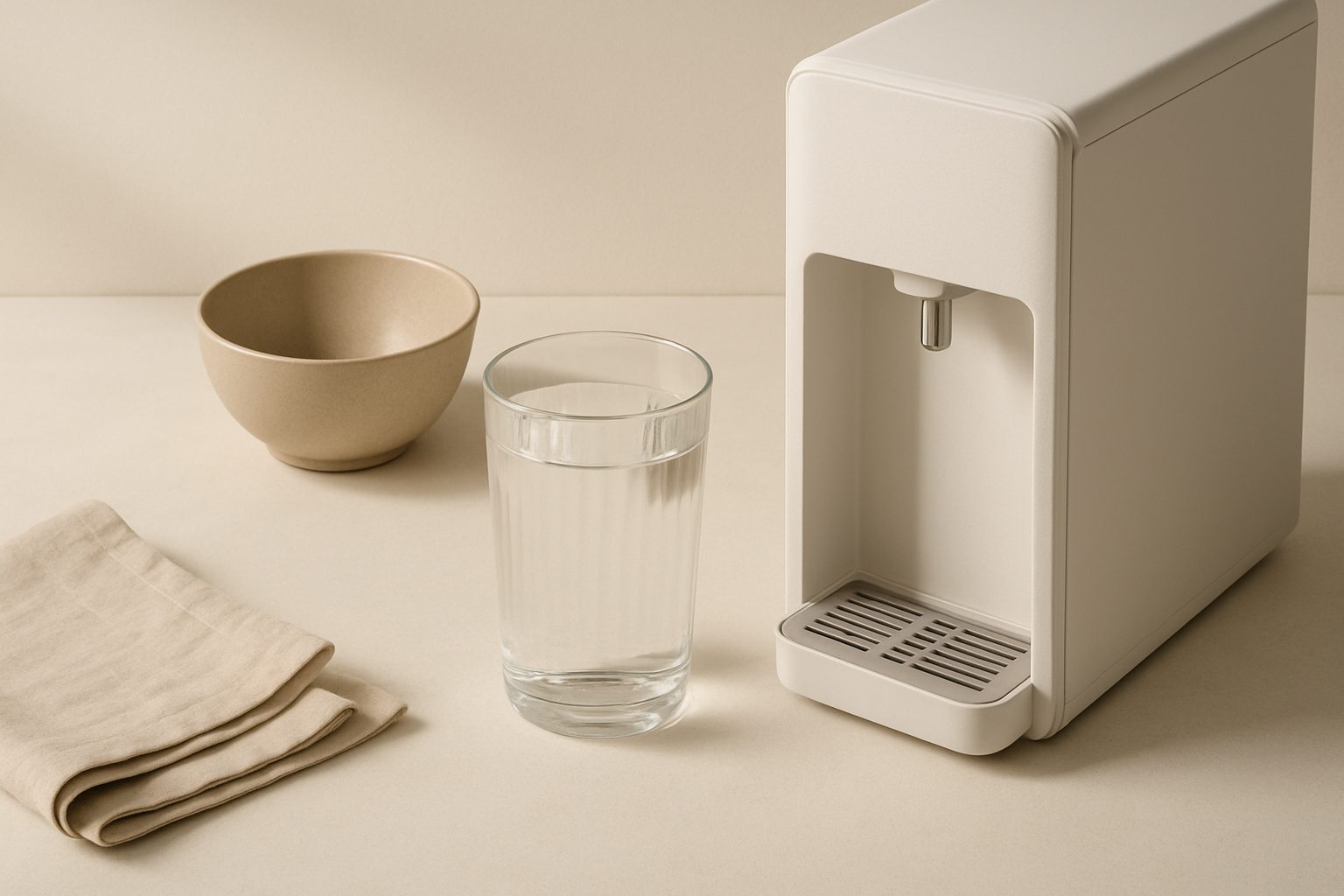
Water Chiller vs Water Filter Jug UK: Is Upgrading to a Chiller Worth It?
If you've been filling a filter jug every morning and wondering whether to invest in a water chiller, you're asking the right question. Both solve the same basic problem—cold, filtered water without buying bottled drinks—but they approach it very differently. Understanding which suits your household depends on your budget, how much chilled water you actually use, and what your tap water quality is like.
What You're Actually Comparing
A filter jug is simple: pour tap water in, wait 3–5 minutes for it to gravity-filter through a cartridge, store it in the fridge. A water chiller connects directly to your water supply (or sits on your worktop) and cools water on demand, usually between 4–16°C. Some chillers also filter; many don't.
The key difference is effort and immediacy. A jug gives you filtered water that's cold if you've remembered to refill it. A chiller gives you cold, filtered water whenever you turn the tap. One is passive and cheap. The other is active and expensive.
Running Costs: The Hidden Factor
Filter jugs look cheap upfront (£15–25), but the real cost lives in replacement cartridges. A decent cartridge costs £4–7 and lasts about 200 litres, or roughly a month for a household that drinks 6–8 litres daily. That's £50–85 per year just on cartridges, plus the jug itself needs replacing every few years.
A water chiller costs £150–500 to buy (for entry-level worktop or tap-mounted models). Running costs depend on the type. Countertop chillers with built-in filters use about 1–2 kWh per day, costing roughly £40–60 annually in electricity. Tap-mounted or under-sink chillers with separate filtration run cheaper—around £15–25 per year—but you're still buying filter cartridges. Over five years, a jug costs £250–425. A chiller costs £225–375 (electricity only, no cartridges) or more if you're replacing cartridges regularly.
The running costs aren't dramatically different. The chiller wins on per-litre efficiency if you drink a lot of water. The jug wins on simplicity and zero maintenance.
Convenience and Lifestyle Fit
Filter jugs demand routine. You need to remember to refill them, plan ahead, and accept that cold water isn't instant. If your household drinks 2–3 litres a day, a jug is genuinely manageable. If you're drinking 8+ litres daily or hosting guests frequently, a jug becomes a chore.
Water chillers deliver instant gratification. You want cold water at 11 p.m. on a Tuesday? You have it. No waiting, no forethought. For families with teenagers, anyone with a home office, or households that entertain regularly, this convenience has real value.
That said, chillers require installation (or worktop space) and occasional maintenance. Tap-mounted and under-sink models involve plumbing work or hiring a plumber—expect £50–150. Worktop models are simpler but noisier and less elegant. Jug maintenance is literally "rinse it occasionally and swap the cartridge."
Water Quality Differences
Not all filters are equal. A standard jug cartridge typically removes chlorine, sediment, and odour, improving taste noticeably. They don't remove all dissolved minerals, viruses, or bacteria—they're taste filters, not purification systems.
Many water chillers skimp on filtration or omit it entirely. If you're buying a chiller primarily for cold water (and your tap water is already decent), this doesn't matter. If you're comparing water quality, a decent filter jug will often outperform a basic chiller. Higher-end chillers add activated carbon or multi-stage filtration, which costs more but delivers better results.
In most of the UK, tap water is safe and clean. A filter jug improves taste. A chiller improves temperature. Only combine them if the chiller model includes proper filtration.
Which Is Worth Upgrading To?
Stick with a filter jug if:
- You drink 2–4 litres of water daily
- Your kitchen is small or rented
- You don't mind waiting 5 minutes for cold water
- Budget is tight
- You're happy with current water quality
Upgrade to a chiller if:
- You drink 5+ litres daily or your household is large
- You're paying for bottled water regularly (a chiller usually pays for itself within 2–3 years)
- You have plumbing accessible under the sink or space on the worktop
- Convenience matters more than effort for you
- You're in a hard water area and want a filter-chiller combination
The Realistic Middle Ground
Many people find the real answer is a better jug, not a chiller. Mid-range filter jugs (Brita Marella, Dafi, Tappecue) perform as well as basic chillers for a fraction of the cost. If a chiller interests you mainly for cold water, buying a £20 jug and keeping it in a cold spot in your fridge is genuinely competitive.
Where a chiller shines is when you combine factors: high household water consumption, tired of bottled water costs, and either good water quality already (skip the filter) or budget for a model that includes one. For first-time buyers, a filter jug is the sensible starting point. But if you find yourself refilling it three times a day and wishing for instant cold water, upgrading makes genuine financial and lifestyle sense.
The "worth it" question isn't about the product—it's about whether your current solution is failing you. Measure that honestly, and the decision becomes clear.
More options
- Under-Sink Mains-Fed Water Chillers (Amazon UK)
- Countertop & Tabletop Water Chillers (Amazon UK)
- Filtered Water Chiller Combo Units (Amazon UK)
- Cold Plunge & Hot Tub Water Chillers (Amazon UK)
- Replacement Chiller Filters & Maintenance Kits (Amazon UK)