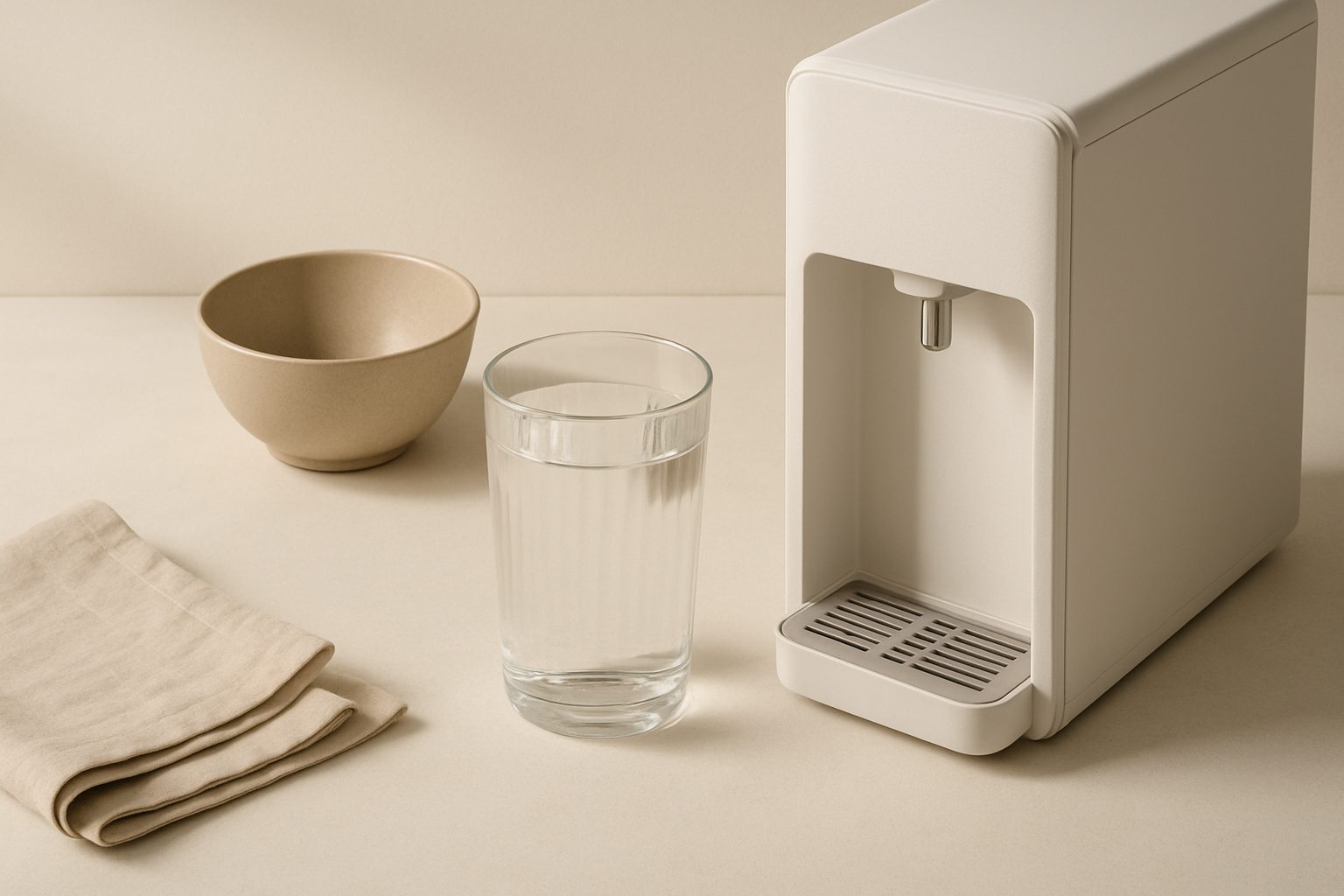
Home Water Chiller vs Water Cooler UK: Which Should You Buy?
If you're looking to upgrade your home or office with chilled water, you've likely come across two very different solutions: active water chillers and bottled water coolers. Both deliver cold water on demand, but they work in completely different ways and suit entirely different needs. Understanding the real differences—not the marketing—matters before you spend £500 to £3,000 on the wrong system.
The Key Difference: Active vs Passive
A water chiller is an active appliance that cools water continuously using a refrigeration cycle. It connects to your mains supply, chills water electrically, and delivers it whenever you tap the dispenser. Think of it like a fridge for water.
A water cooler (in the UK context) typically refers to a passive bottled-water dispenser. You buy or rent pre-chilled bottles, slot them into the top of the unit, and it keeps that water cold for days. No plumbing required.
These aren't really competitors—they're solutions for completely different situations. But once you know what each does, the choice becomes much clearer.
Water Chillers: Always-On Convenience
An mains-fed water chiller sits under your sink or in a cupboard, plumbed directly into your water supply. It filters, chills, and dispenses water at the push of a button or lever. Most models offer both chilled and ambient (or hot) water from a single tap.
Pros:
- Unlimited cold water—no waiting for bottles to arrive
- Lower cost per litre over time (usually 0.5–2p per litre vs 5–15p for bottled)
- No bottle logistics—no delivery scheduling, no storage space needed
- Modern units filter water, improving taste and removing chlorine
- Good for high-usage environments (offices, homes with large families)
- Space-efficient if you're short on floor space
Cons:
- Installation requires a plumber if not DIY-capable (typically £200–400)
- Initial cost is higher (£800–£2,500 for decent units)
- Regular filter changes (annual or twice-yearly, £40–100 each)
- Uses electricity continuously (roughly £30–80 per year, depending on usage)
- Requires adequate kitchen or utility space for the unit
- Mains water quality varies by area; hard water can reduce chiller efficiency
Water Coolers: Simplicity and Flexibility
Bottled coolers need no installation beyond finding a plug socket. You buy or rent 18.9-litre bottles, pop them in from above, and the water gradually cools from its pre-chilled state. Some models also offer hot water for tea and coffee.
Pros:
- Zero installation hassle—arrives ready to use
- Low upfront cost (£100–400 for the unit; many are free if renting bottles)
- No plumbing or DIY required
- Portable—move it whenever you like
- Pre-filtered water (filtered by the supplier)
- Predictable monthly costs if you rent bottles
- Good for offices with variable water needs
Cons:
- Ongoing bottle costs (typically £5–10 per bottle, or renting for £8–12)
- For heavy users, running costs are higher than mains systems
- Bottles need storage space; someone has to lift them (awkward and heavy)
- Bottle delivery schedules can be inflexible
- Environmental impact of plastic bottles (though recyclable)
- Water quality depends on supplier; variable between brands
- Takes time to chill a fresh bottle (several hours)
Real-World Costs: Over Five Years
For a three-person household using 20 litres per week:
Water Chiller: £1,200 (unit) + £150 (installation) + £100 (filters, two per year) + £250 (electricity) = £1,700 total
Bottled Cooler: £200 (unit, if purchased) + £3,120 (52 bottles per year at £6 each) = £3,320 total
If you rent bottles and the dispenser, costs are lower but less controllable.
Maintenance: What Actually Matters
Water chillers need annual filter changes and occasional descaling if you're in a hard-water area. That's it. Most failures are mechanical (compressor issues after 5–7 years), and modern units are reliable.
Bottled coolers need next to no maintenance beyond basic cleaning inside and out. The risk isn't mechanical—it's bottle cleanliness. Some suppliers clean bottles well; others don't.
Which Should You Buy?
Choose a water chiller if:
- You use more than 15–20 litres of cold water weekly
- You have space under a sink or in a utility area
- You can handle or budget for installation
- You want the lowest long-term costs
- You're environmentally conscious about plastic waste
Choose a bottled cooler if:
- Your cold-water use is occasional or unpredictable
- You rent rather than own (landlord issues with mains installation)
- You move frequently or want portable flexibility
- You prefer minimal setup and no maintenance
- You already have a bottled-water habit
The Real Talk
If you're in a typical UK home and actually use cold water daily—filtered and fresh—a mains chiller is the better financial and practical choice. The upfront cost feels high, but it pays for itself within two to three years and keeps paying.
If cold water is a convenience you'd like but don't regularly need, or if your situation doesn't allow plumbing changes, a bottled cooler removes all friction and is perfectly sensible.
Don't let marketing push you toward the more expensive option. Both work. The question is which fits your actual usage and living situation. Once you're clear on that, choosing between specific models is straightforward—look for reliability ratings, filter availability, and warranty terms rather than flashy features.
More options
- Under-Sink Mains-Fed Water Chillers (Amazon UK)
- Countertop & Tabletop Water Chillers (Amazon UK)
- Filtered Water Chiller Combo Units (Amazon UK)
- Cold Plunge & Hot Tub Water Chillers (Amazon UK)
- Replacement Chiller Filters & Maintenance Kits (Amazon UK)